The UK anti-corruption strategy 2025 raises expectations for firms to demonstrate stronger governance and transparency to align with changing standards.
This roadmap aims to boost economic growth and tackle the threat corruption and illicit finance pose to national security and to the UK’s reputation as a trusted place to do business.
Fraud and corruption cost the UK economy huge sums. According to the National Crime Agency, over £100 billion could be laundered through or within the UK every single year.
“In this context of geopolitical instability and accelerating technological change, a clear and concerted strategy is necessary to protect the UK, support long-term economic growth and uphold the integrity of public life,” said the Minister for Security, Dan Jarvis.
The strategy paper comes after UK legislation came into force, seeking to hold businesses above a certain size to account if they profit from fraud committed by their employees.
It also raises the bar for high-risk sectors like financial services firms in demonstrating proactive risk management, particularly in how they monitor, assess, and respond to corruption-related vulnerabilities.
The Serious Fraud Office (SFO) will be given the green light to tackle international and domestic fraud, which in turn means UK firms should prepare for a strict enforcement environment.
Key takeaways
The anti-corruption strategy adopts a broad definition of corruption as the “abuse of entrusted power for private benefit that usually breaches laws, regulations, standards of integrity and/or standards of professional behaviour”.
It aims to build a fairer and more transparent system that works for people and businesses.
The three strategic pillars of the UK Anti-Corruption Strategy 2025
1. Focuses on stopping corrupt actors and illicit finance before it causes damage
Focuses on detecting, investigating, and disrupting corrupt individuals, enablers, and the financial systems they exploit.
- Includes measures like AI-assisted investigations (e.g. for the SFO) and faster investigations by closing loopholes
- Centralising AML supervision across professional services
- Strengthening asset recovery tools and enforcement cooperation
2. Addresses UK-specific corruption risks
Targets vulnerabilities within UK institutions, including public procurement, politics, policing, and professional services.
- Focus on domestic threats such as corrupt insiders and enablers
- Establishment of new Ethics and Integrity Commission
- Anti-bribery training, SME support, and whistleblower reform
3. Strengthens international cooperation and resilience
Aims to position the UK as a global leader in anti-corruption efforts by working with international partners and standards bodies to raise standards, recover stolen assets, and support countries hit hardest by corruption.
- Alignment with OECD, FATF, UN, and G20 anti-corruption frameworks
- Hosting the 2026 Countering Illicit Finance Summit
- Supporting developing countries in corruption prevention and enforcement
How FinregE can help
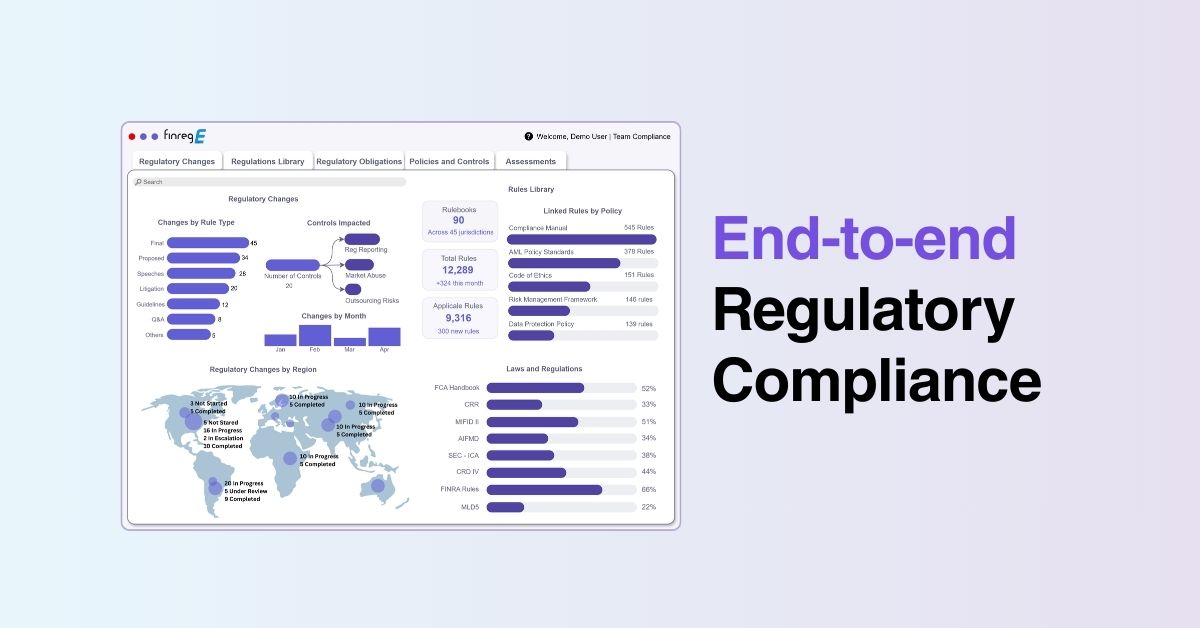
Our AI will capture any updates to regulatory changes or guidance related to corruption and fraud, keeping firms one step ahead of risks.
The UK’s Anti-Corruption Strategy 2025 raises the bar for integrity, transparency, and accountability, especially for firms operating in high-risk sectors like financial services.
It challenges organisations not just to comply, but to prove that their governance, risk, and compliance systems are working.
FinregE supports firms by turning these broad expectations into structured, auditable workflows, helping compliance teams stay in control, even as expectations evolve.
How we support firms:
- Real-time horizon scanning and regulatory insight
Track anti-corruption developments from the SFO, HMRC, FCA, OECD, and global bodies with plain-language summaries, obligations, and deadlines. - Governance mapping across policies, risks, and controls
Link regulatory updates to internal frameworks to show clear accountability and strengthen audit trails for self-disclosure and board reporting. - Automated reporting and audit-readiness
Generate structured evidence of compliance activities, decision-making, and risk assessments; key to demonstrating a proactive stance. - Support for ethical culture and transparency programs
Enable teams to track guidance on anti-bribery practices, whistle-blower protections, and ethical supply chain obligations. - Cross-border content intelligence
Understand corruption-related risks across jurisdictions, with machine-translated updates and jurisdiction-specific tagging.
Firms that take early action and embed transparency into everyday compliance processes will be best positioned, not only to meet expectations but to turn strong governance into a strategic advantage.